
India will not be signing the ambitious Free Trade Agreement with the 10-nation economic bloc, Association of Southeast Asian Nations, at the 4th East Asia summit to be held in Thailand on April 11 and 12. Commerce Minister Kamal Nath will be attending the summit, where the seventh India-Asean meeting is also scheduled at the same venue.
Manmohan Singh faced stiff competition in Singapore. No, not at the East Asia Summit or in meetings with the Asean. But the rival attractions of two imaginative exhibitions on India's past and an exhaustive three-day conference titled "Early Indian Influences in Southeast Asia" eclipsed his presence while China's Wen Jiabao basked in media glory that reflected the reality of economic and military power.

While Modi has spent fewer days abroad than his predecessor (270 days versus Dr Singh's 306), he has travelled more extensively and actively than any other Indian PM.

Having invested close to $15 billion in Indonesia, Indian firms have lined up further $15-16 billion investments.

Accompanying the Veep on his first foreign yatra after being elected to the vice presidency in August is External Affairs Minister Subrahmanyam Jaishankar, who, we guess, will do the heavy lifting at the summit, while Dhankar works his well known charm on the ASEAN leadership fraternity.

The statements made by Obama and Suu Kyi during his Myanmar visit highlighted the differing perceptions of the two over the sustainability and durability of the actions taken by the Thein Sein government, notes B Raman.

New Delhi, while opting not to retaliate yet to the American tariffs, has in recent weeks sought to reinforce its friendship with Moscow, and recalibrate its ties with Beijing rather than surrender to Washington's diktats.

Prime Minister Narendra Modi has said that the Quad is not against anyone, but for a rules-based international order and respect for sovereignty, in a veiled reference to China.

Continued uncertainty or confrontation in the Asia-Pacific is clearly in no one's interest as it will affect major powers' attempts to restructure their economies and revive growth. Conflict would roll back the gains to each of our countries of 40 years of stability and peace, says Shivshankar Menon.

Pitching for freer movement of goods, services and people across South Asia, Prime Minister Manmohan Singh on Wednesday warned that the region faces the risk of "marginalisation and stagnation" if member countries fail to build SAARC as a group that is better connected and better empowered.
The issue at hand is not ASEAN versus Chindia, but ASEAN plus Chindia. Given the strengths of ASEAN and the growing muscle of India and China, the scope for constructive cooperation is immense, he said.
US President Barack Obama's proposed visit will be coming less than a month after a new spell of violence between the native Buddhists of the Rakhine State and the Rohingya Muslims, points out B Raman

"We often thought of terrorism as a peripheral problem for this region. The barbaric terrorist strikes in Paris, Ankara, Beirut, Mali and on the Russian aircraft is a stark reminder that its shadow stretches across our societies and our world, both in recruitment and choice of targets," Modi said in his remarks at the East Asia Summit.
"The Chinese premier underlined that whatever anybody might say, India and China are friendly neighbours and have a common view of how the world should be looked at," Naraynan said.
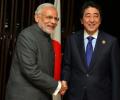
The national flag was in the background of Modi and Abe's customary handshake at the Summit and was hoisted on a stand next to that of Japan.
If the US' renewed closeness with Pakistan ends up strengthening Pakistan's military, it will clearly show that Washington no longer wants a strong India and could be ready to let China dominate Asia, notes Colonel Anil A Athale (retd).
Prime Minister Manmohan Singh arrived in Tokyo on the first leg of his three-nation visit, during which he would hold talks with his Japanese counterpart Naoto Kan on a range of issues, including civil nuclear energy cooperation.
"India is a big part of my plans," United States President Barack Obama said on Tuesday as Prime Minister Manmohan Singh congratulated him in person on his re-election.
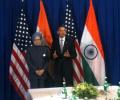
Dr Singh and Obama, who met on the sidelines of ASEAN and East Asia Summits, talked about strengthening the bonds of strategic ties put in place during the historic visit of the US President to India in November last year.

'India needs to be cautious that its differences with Pakistan do not obstruct SCO's functioning,' says Sana Hashmi.

India will make a strong pitch for new initiatives with ASEAN countries to collectively respond to challenges thrown up by the global economic meltdown and climate change during the two day India-ASEAN and East Asia Summits beginning in Thailand tomorrow.
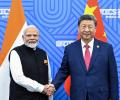
India and China celebrated the 75th anniversary of their diplomatic relations on Tuesday, with leaders from both countries exchanging congratulatory messages. The anniversary comes as the two countries are working to restore ties after a four-year freeze due to the military standoff in eastern Ladakh. Both countries have expressed a willingness to enhance strategic mutual trust and step up cooperation in various fields. The two sides are also exploring ways to rebuild ties and promote people-to-people exchanges.
Prime Minister Manmohan Singh said on Sunday in an interview to the Japanese media in Tokyo that India is confident of signing a 'win-win' civilian nuclear deal with Japan and is looking forward to a comprehensive economic partnership agreement to boost bilateral trade.
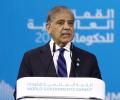
Pakistan Prime Minister Shehbaz Sharif said on Tuesday that his country respects Russia's relations with India, as he called for strengthening Islamabad's ties with Moscow during his talks with Russian President Vladimir Putin in Beijing.

The two leaders are understood to have discussed ways to expand bilateral ties. The 30-minute meeting took place on the sidelines of the ASEAN-India summit. Trade between the two countries has been growing at a rapid pace and the two nations have set an ambitious target of $10 billion to be achieved by 2010.

Last month, President Trump offered to be the "mediator" between India and Pakistan on the Kashmir issue when he met Prime Minister Imran Khan for the first time at the White House.

Describing the boundary question with China as a "complex issue", Prime Minister Manmohan Singh on Sunday said it cannot be "wished away" and both sides have an obligation to maintain peace and tranquility pending a solution.
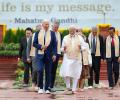
The US hails the landmark 'India-Middle East-Europe Economic Corridor' which will usher in a new era of connectivity from Europe to Asia and will stimulate economic growth across the two continents.
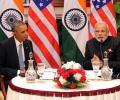
India has moved beyond the traditional trappings of non-alignment

Trump couldn't care less anymore about the Israeli demand for Iran's 'de-nuclearisation' and 'de-militarisation.' Trump pins hopes on a grand bargain with Iran as a partner in America First, argues Ambassador M K Bhadrakumar.
Dr Singh said there was general support that civil nuclear energy be considered as an option to meet the need for clean energy and that this deserved greater attention of the international community.

The upcoming Durand Cup may have only six Indian Super League (ISL) teams in the fray, down from 12 last season.

Prime Minister Narendra Modi returned home on Thursday after a nine-day-three-nation tour of Myanmar, Australia and Fiji during which he had a range of international engagements.
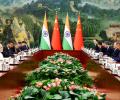
Chinese President Xi Jinping told Prime Minister Narendra Modi that India and China should approach their relations from a "strategic" and "long-term perspective" during their talks in Tianjin. Xi also emphasized upholding multilateralism and working towards a multipolar world.
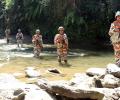
China's military has said it is willing to work with India to find a solution to the border issue, while also pushing for sound and stable defence ties. The statement comes after recent meetings between officials from both countries to normalize relations following a prolonged period of tension.
With India and ASEAN making little progress on a proposed free trade pact, Prime Minister Manmohan Singh asked the 10-nation bloc on Tuesday to be "more reasonable" on sensitive farm products. "We are trying to persuade our ASEAN friends to be more reasonable and I am hopeful that this process will yield satisfactory outcome," Singh said.
He also made it clear that the government had nothing to hide on the Volcker issue and that there was a procedure to be followed.
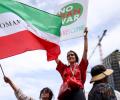
China and Russia on Sunday strongly condemned the United States air strikes on Iranian nuclear facilities, with China calling it a serious violation of the United Nations Charter that heightens tensions in West Asia, and Russia terming the strikes 'irresponsible' and asserting that they grossly violate international law, the UN Charter, and UN Security Council resolutions.
